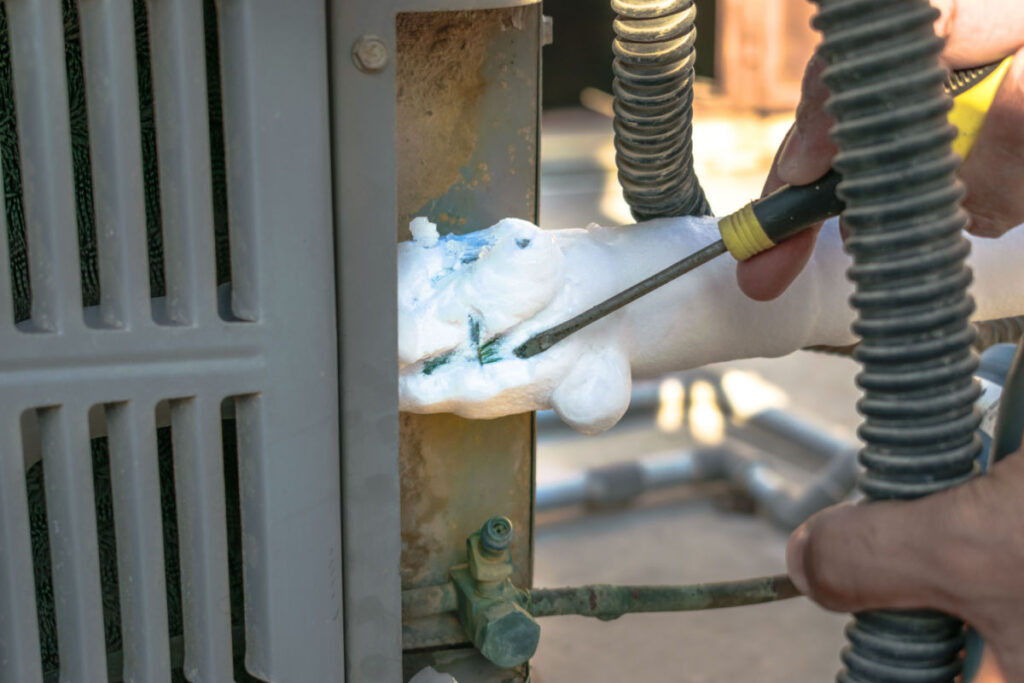
Discovering ice on your air conditioning unit during the middle of an Arlington summer feels genuinely counterintuitive, but a frozen evaporator coil is one of the more common AC problems homeowners encounter, and understanding what causes it helps you address the issue before it leads to more significant compressor damage.
Why Ice Forms on a Component Meant to Cool the Air
An evaporator coil is designed to absorb heat from air passing over it, a process that requires proper airflow and adequate refrigerant levels to function correctly. When either of these factors is disrupted, restricted airflow or low refrigerant, the coil's surface temperature can drop low enough to cause moisture in the air to freeze directly onto it, rather than simply cooling the air as intended.
Restricted Airflow Is the Most Common Culprit
A dirty air filter is frequently the root cause behind evaporator coil freezing, since a clogged filter restricts the volume of warm air passing over the coil. Without sufficient warm air flowing across it, the coil's temperature drops below freezing, causing condensation to form ice rather than draining away normally. Closed or blocked supply vents, a failing blower motor, or dirty ductwork can create the same restricted airflow problem.
Low Refrigerant Levels and Freezing
When refrigerant levels drop below what a system requires, often due to a leak somewhere in the refrigerant lines, the coil's pressure and temperature balance is disrupted, causing it to run colder than designed and leading to ice formation on its surface, along with reduced cooling performance throughout the home.
Why Running a System With a Frozen Coil Makes Things Worse
Continuing to run an AC system with an already frozen evaporator coil doesn't resolve the underlying issue, it typically compounds it, since the system continues struggling against the ice buildup, potentially straining the compressor and leading to more expensive repairs than addressing the original airflow or refrigerant problem promptly would have required.
What to Do If You Notice Ice on Your Unit
Turning off the AC system and switching the fan setting to "on" rather than "auto" allows warm air to circulate and helps melt existing ice, giving you time to schedule a professional inspection rather than continuing to run the system in a compromised state that risks further damage.
Why DIY Fixes Rarely Address the Root Cause
While melting existing ice buildup is a reasonable immediate step, it doesn't resolve the underlying issue causing the freeze in the first place. Whether the cause is a dirty filter, a failing blower motor, or a refrigerant leak, professional diagnosis is necessary to identify and properly address the actual root cause rather than simply defrosting the coil and hoping the problem doesn't recur.
How Regular Maintenance Prevents This Issue
Many cases of evaporator coil freezing trace back to preventable maintenance gaps, dirty filters, low refrigerant from an undetected leak, or accumulated dirt on the coil itself restricting airflow. Regular professional maintenance catches these developing issues before they progress to the point of causing a full freeze-up.
Why Professional Diagnosis Matters
Determining the specific cause of evaporator coil freezing, whether airflow-related or refrigerant-related, requires proper diagnostic tools and experience, since treating the wrong underlying cause won't resolve the freezing issue and may allow continued damage to occur.
The team at Old Glory Air Conditioning and Heating diagnoses and resolves evaporator coil freezing issues for Arlington homeowners, addressing the actual root cause rather than just the visible ice.

Noticing ice on your AC unit? Reach out to Old Glory Air Conditioning and Heating today.
