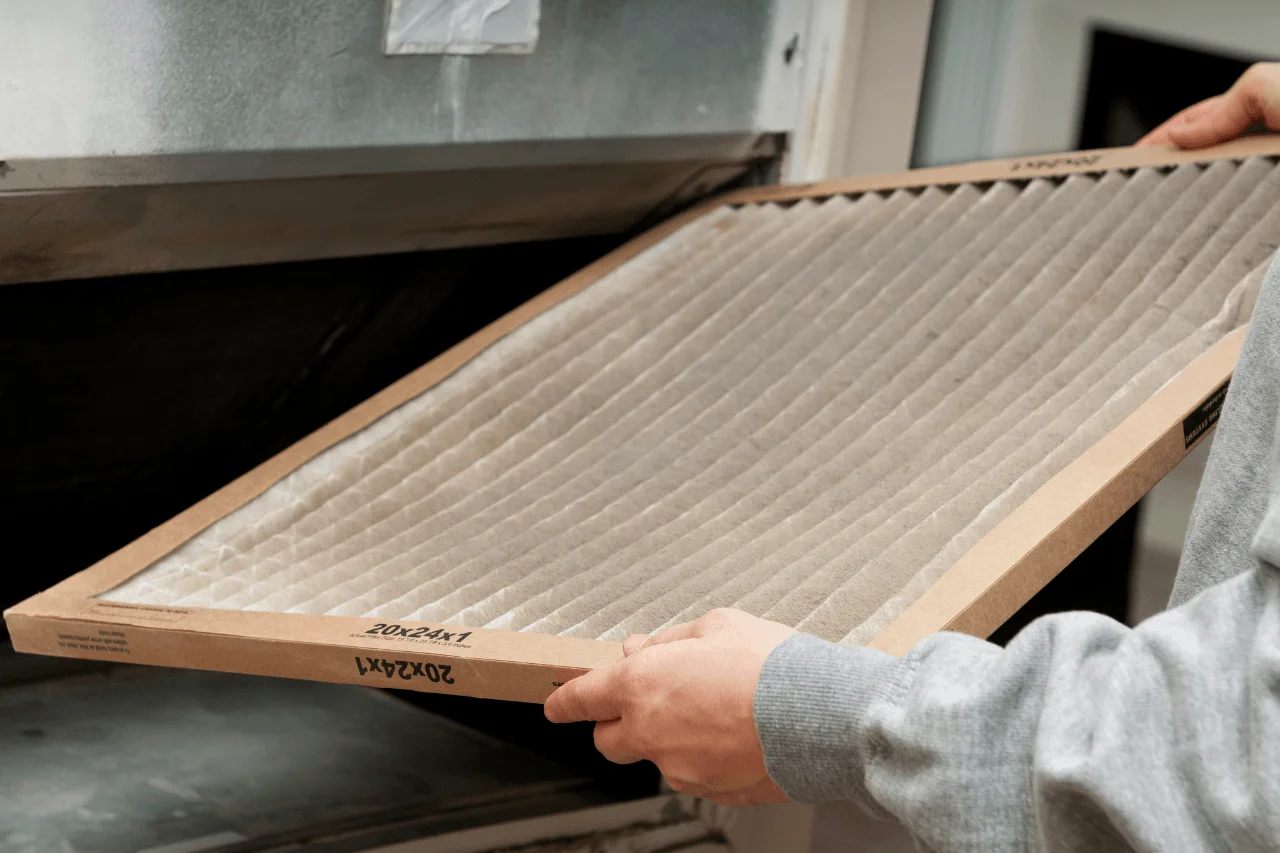
When shopping for a replacement air filter, homeowners are often faced with a range of MERV ratings without a clear understanding of what the number actually means. Old Glory Air Conditioning and Heating breaks down this rating system to help you choose the right filter for your home.
MERV stands for Minimum Efficiency Reporting Value, a standardized rating system that measures how effectively an air filter captures particles of different sizes as they pass through your HVAC system.
MERV ratings typically range from 1 to 16 for residential and light commercial use, with higher numbers indicating the filter captures smaller, finer particles more effectively than lower-rated filters.
Filters in the lower range, roughly MERV 1 through 4, primarily capture larger particles like dust and lint, offering basic protection for your HVAC equipment but limited benefit for airborne allergens or finer particles.
Filters in the MERV 8 to 10 range are a common choice for many households, offering improved capture of smaller particles like pet dander and mold spores while still maintaining reasonable airflow for most residential systems.
Filters rated MERV 11 through 13 capture even finer particles, including many bacteria and smoke particles, making them a popular choice for households with allergy or respiratory concerns, though not every HVAC system is designed to handle the reduced airflow these denser filters can create.
While it might seem logical to simply choose the highest MERV rating available, filters with very high ratings can restrict airflow more than some residential systems are designed to handle, potentially straining your blower motor and reducing overall system efficiency.
Before upgrading to a significantly higher MERV rated filter, it's worth checking your HVAC system's specifications or consulting with a technician to confirm your equipment can handle the airflow restriction that comes with denser filtration.
For households with specific health or allergy concerns, working with an HVAC professional to find a filter that balances improved filtration with your system's airflow capabilities helps achieve better air quality without compromising performance.
Thicker filters, often four to five inches compared to standard one-inch filters, can sometimes offer higher MERV-equivalent filtration while maintaining better airflow, due to their larger surface area, making this worth discussing as an alternative to simply increasing the MERV rating of a standard filter.

Our team helps Arlington area homeowners choose the right MERV rated filter for their specific HVAC system and household needs, balancing air quality goals with system performance.