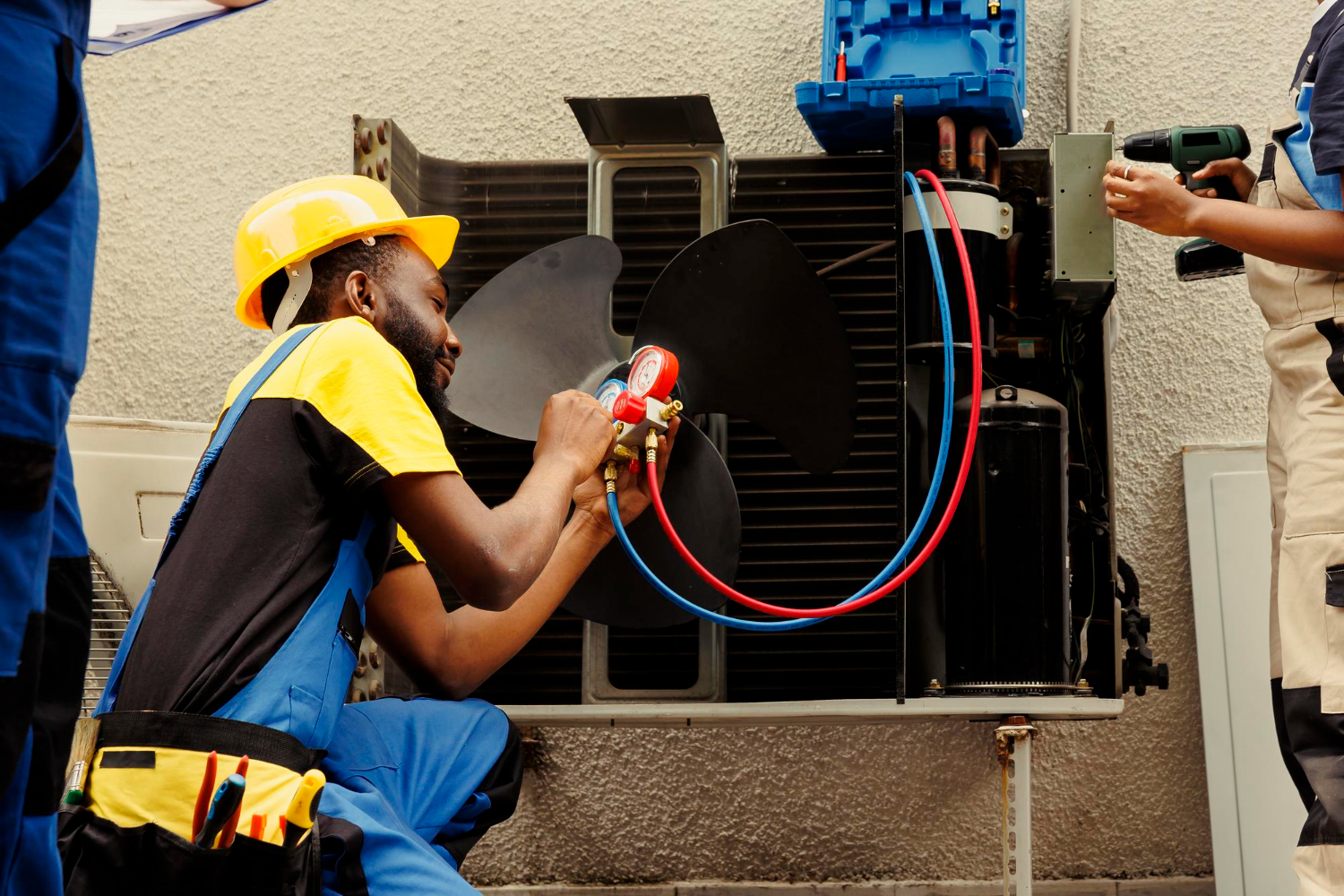
Finding the exact source of a refrigerant leak requires specialized knowledge and equipment, since these leaks are often small and located in areas that aren't easily visible. Old Glory Air Conditioning and Heating explains how professional technicians approach this detective work.
One of the first steps in leak detection often involves testing the system's overall refrigerant pressure compared to manufacturer specifications, which can confirm whether a leak is likely present before narrowing down its specific location.
Technicians typically begin by visually inspecting common leak locations, including refrigerant line connections, valve fittings, and the evaporator and condenser coils themselves, looking for signs like oil residue that often accumulates near refrigerant leaks.
Electronic leak detection equipment can sense the presence of refrigerant in the air, allowing technicians to methodically check connections and components for small leaks that might not be visible to the naked eye.
In some cases, technicians may introduce a UV-reactive dye into the system's refrigerant, then use a specialized UV light to identify the leak location, since the dye will accumulate visibly at the point where refrigerant is escaping.
For accessible connections and fittings, applying a soap-based bubble solution can reveal a leak through visible bubbling at the exact point where refrigerant is escaping, providing a straightforward, low-tech confirmation method.
Leaks located within the evaporator coil itself, particularly on systems where the coil isn't easily accessible, can require more extensive diagnostic work compared to leaks at more accessible connection points.
Simply recharging a system without identifying and repairing the actual leak location only provides a temporary fix, since the refrigerant will continue to escape and the same low-refrigerant symptoms will return.
Once the leak location is confirmed, the technician will repair the affected component or connection, then recharge the system to the manufacturer's specified refrigerant level and verify proper operation.
Attempting to diagnose a refrigerant leak without proper training and equipment often leads to guesswork rather than an accurate diagnosis, which is why this process should always be handled by a licensed, experienced HVAC technician.

Our technicians use professional-grade leak detection equipment and methods to accurately locate and repair refrigerant leaks for Arlington area homeowners.