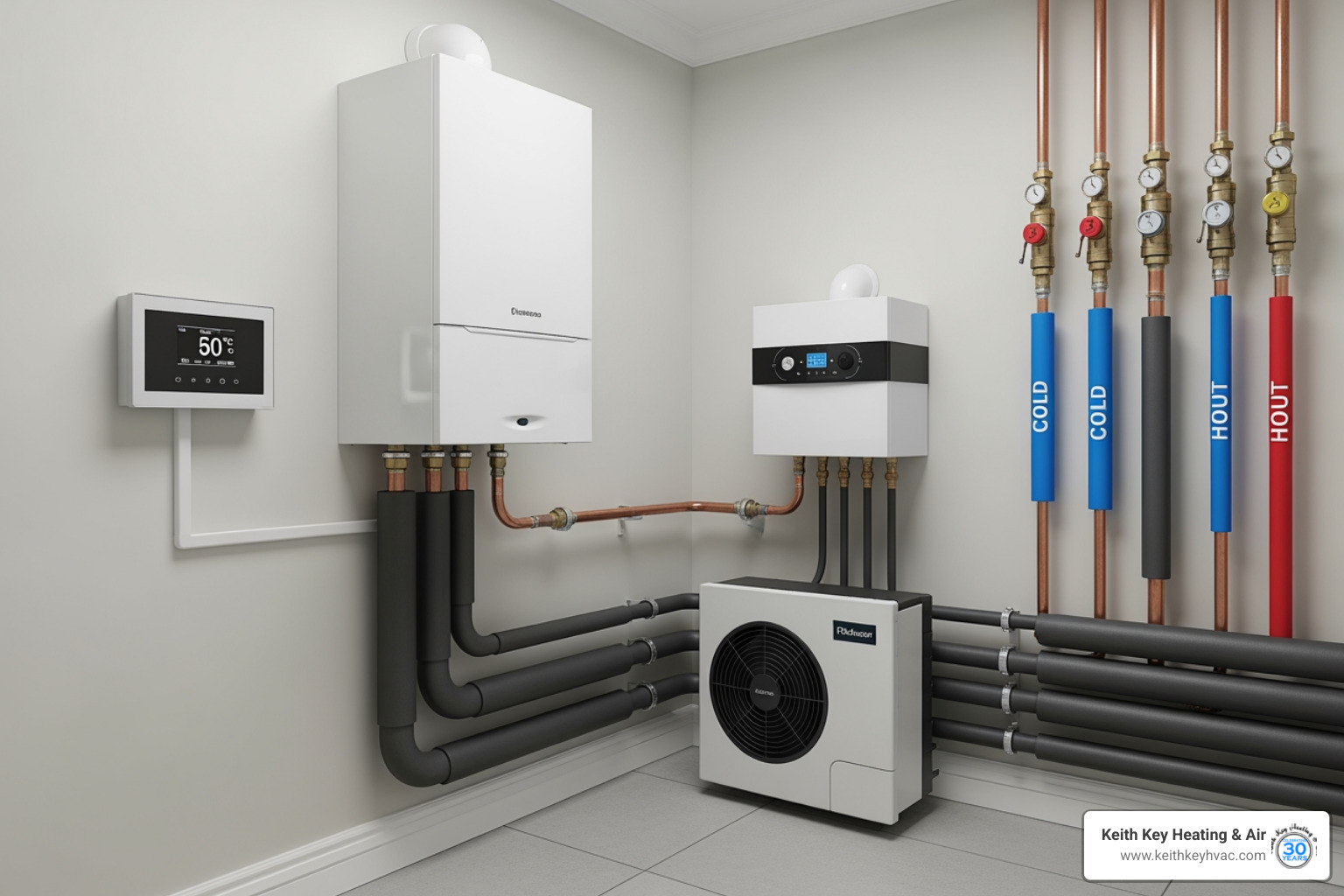
Arlington's mild but variable winters, ranging from relatively comfortable stretches to occasional hard freezes, create an interesting opportunity for homeowners to consider a dual fuel heating system, one that combines a heat pump with a gas furnace to optimize efficiency across this range of conditions rather than relying on a single heating source alone.
How a Dual Fuel System Actually Works
A dual fuel system pairs an electric heat pump with a gas furnace, using the heat pump as the primary heating source during milder outdoor temperatures, when it operates most efficiently, and automatically switching to the gas furnace when outdoor temperatures drop low enough that the heat pump's efficiency declines significantly, typically somewhere in the 30-40 degree range depending on the specific equipment.
Why This Combination Makes Particular Sense for Arlington's Climate
Arlington experiences a genuine mix of heating conditions throughout a typical winter, extended mild stretches where a heat pump operates highly efficiently, alongside occasional cold snaps where a heat pump's efficiency drops considerably. A dual fuel system is specifically designed to capture the efficiency benefits of a heat pump during the majority of the heating season while still having reliable furnace backup for the coldest days.
Energy Efficiency Benefits Compared to a Furnace-Only System
Since heat pumps move existing heat rather than generating it through combustion, they typically operate more efficiently than gas furnaces during moderate temperature conditions. A dual fuel system captures these efficiency savings during the bulk of a typical Arlington winter while avoiding the heat pump's declining efficiency during the coldest periods by automatically switching to furnace heat.
How the Switchover Between Systems Actually Happens
A properly installed dual fuel system uses a thermostat programmed with a specific outdoor temperature threshold, or "balance point," that determines when the system switches from heat pump operation to furnace operation. This switchover happens automatically without requiring homeowner intervention, seamlessly transitioning between heating sources based on outdoor conditions.
Setting the Balance Point Correctly
Determining the optimal balance point temperature for switching between heat pump and furnace operation requires understanding both the specific heat pump's efficiency curve and the local climate's typical temperature patterns. Setting this threshold incorrectly can result in either underutilizing the more efficient heat pump or relying on it past the point where furnace heat would actually be more efficient.
Cost Considerations for Dual Fuel Systems
Installing a dual fuel system generally costs more upfront than a single-source heating system alone, since it requires both a heat pump and a furnace working in coordination. However, the ongoing energy savings from optimized efficiency across the heating season can offset this higher initial investment over time, particularly for homeowners planning to remain in their home long enough to benefit from the accumulated savings.
Why This System Requires Proper Installation and Programming
A dual fuel system's efficiency benefits depend entirely on correct installation and proper balance point programming. An improperly configured system may not deliver the efficiency advantages the dual fuel approach is specifically designed to provide, undermining the investment's core value proposition.
Comparing Dual Fuel to Heat Pump-Only or Furnace-Only Systems
A furnace-only system provides reliable heating regardless of outdoor temperature but misses out on the efficiency benefits a heat pump offers during milder conditions. A heat pump-only system captures those efficiency benefits but depends on less efficient electric auxiliary heat during the coldest periods. Dual fuel effectively splits the difference, using each heating source during the conditions where it performs best, which is why many homeowners view it as a genuine middle-ground solution rather than a compromise.
Maintenance Considerations Specific to Dual Fuel Systems
Because a dual fuel system involves two distinct heating components working together, maintenance visits need to address both the heat pump and furnace sides of the system, along with verifying the switchover control and balance point settings are still functioning correctly, making annual maintenance particularly valuable for these more complex systems compared to simpler, single-source heating setups.
Why This Investment May Make Particular Sense for Long-Term Homeowners
Given the higher upfront cost relative to a single-source system, dual fuel heating tends to deliver its strongest value for homeowners planning to remain in their home for many years, allowing sufficient time for accumulated energy savings to offset the initial investment difference compared to a standard furnace-only or heat pump-only installation.
Why Professional Guidance Helps With This Decision
Determining whether a dual fuel system genuinely makes sense for your specific home, budget, and heating needs benefits from an honest assessment of your home's heating patterns and long-term ownership plans, rather than assuming this more complex system is automatically the right choice for every Arlington homeowner.
The team at Old Glory Air Conditioning and Heating installs and properly configures dual fuel heating systems for Arlington homeowners looking to optimize efficiency across our region's variable winter conditions.

Considering a dual fuel heating system for your home? Reach out to Old Glory Air Conditioning and Heating today.
